How to reply when a prospect asks for more information
Three email replies for a prospect who asks for details, requests something to forward or wants to understand your offer.
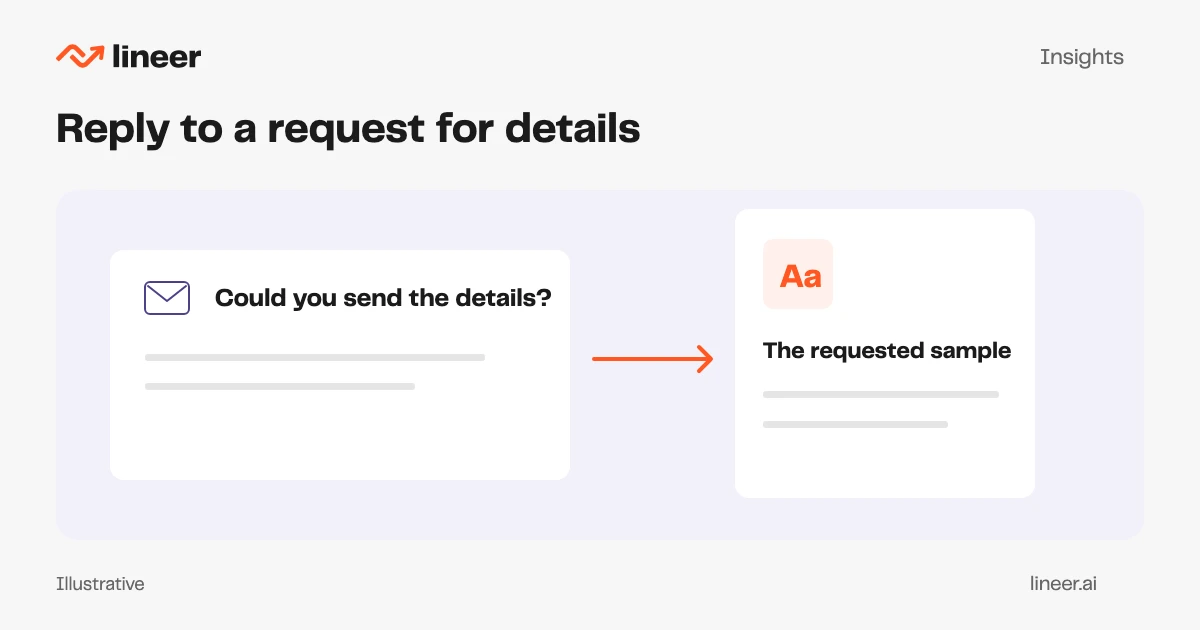
A prospect asking for more information has given you a specific reason to continue the conversation. We recommend answering that request in your next email, with enough explanation for them to assess what you send. If they asked for a sample, send it and explain where to look. If they asked what you do, describe the work in terms they can relate to their business.
The next decision is how to help them evaluate it. Sometimes a short email answers the question. Sometimes a call would let you understand a concern that a longer email would leave unresolved. This guide explains how to choose your response, with three annotated examples you can adapt.
The original offer tells you what to send
Your opening email often supplies the context missing from a short reply. If you offered a sample supplier review and the prospect says “send me more information,” you already have a useful starting point. Send that review with a sentence explaining what it shows. Asking them to repeat the request adds another exchange before they receive what you offered.
A short explanation makes a document easier to assess. Point to the relevant page or section and describe what the prospect can learn from it. Check that they can open the link and that the material is suitable to share. Choose the resource that answers their request, then leave room for their questions.
The annotated emails below use a fictional supplier review service. They are original editorial examples informed by the request types in our pooled Lineer review. Their wording has not been tested for sales performance.
Email anatomy
When they ask for a sample
Select a marked passage to see its purpose.
Evidence boundary Original teaching example adapted from pooled request types. Lineer has not tested this wording.
A forwarded email needs to make sense on its own
A colleague receiving your email needs enough context to understand why it was sent to them. Include who the service helps, what work it covers and a resource they can inspect. This gives your contact something they can forward without writing a separate explanation.
A request to share material also tells you something about the evaluation process. Your contact could be gathering input, seeking approval or directing you to the person responsible. Ask about that process when it would help you provide the right information. Let them choose whether an introduction is appropriate.
Email anatomy
When they need to forward it to a colleague
Select a marked passage to see its purpose.
Evidence boundary Original teaching example adapted from pooled request types. Lineer has not tested this wording.
A broad request needs an answer before another question
You can usually explain the offer even when you don’t yet know which detail matters most. Give that explanation first. Then ask a narrow question if the answer would change what you send next. For example, a prospect evaluating the output needs a sample, while someone evaluating the working relationship needs to know what their team would have to do.
The question should resolve a specific uncertainty in the conversation. If the prospect already asked for pricing, coverage or a sample, answer that request. If they only asked for details, a short overview and a choice of what to explore next can help them direct the conversation.
Email anatomy
When the request leaves the question open
Select a marked passage to see its purpose.
Evidence boundary Original teaching example adapted from pooled request types. Lineer has not tested this wording.
Let the conversation determine the next contact
The prospect’s review process gives you a reason and a time to follow up. If they plan to share your sample at a purchasing meeting, reconnect after that discussion and ask what questions came up. Record the material you sent, the agreed timing and who will act. The sales reply worksheet helps you track that obligation alongside the evidence of buying interest.
A call can help when an email exchange leaves the prospect’s concern unclear. A brief or neutral response can still warrant a conversation, especially if you need to understand how the offer fits their situation. Explain what you would discuss and ask whether a call would be useful. Respect a stated preference for email and avoid treating silence as agreement to a meeting.
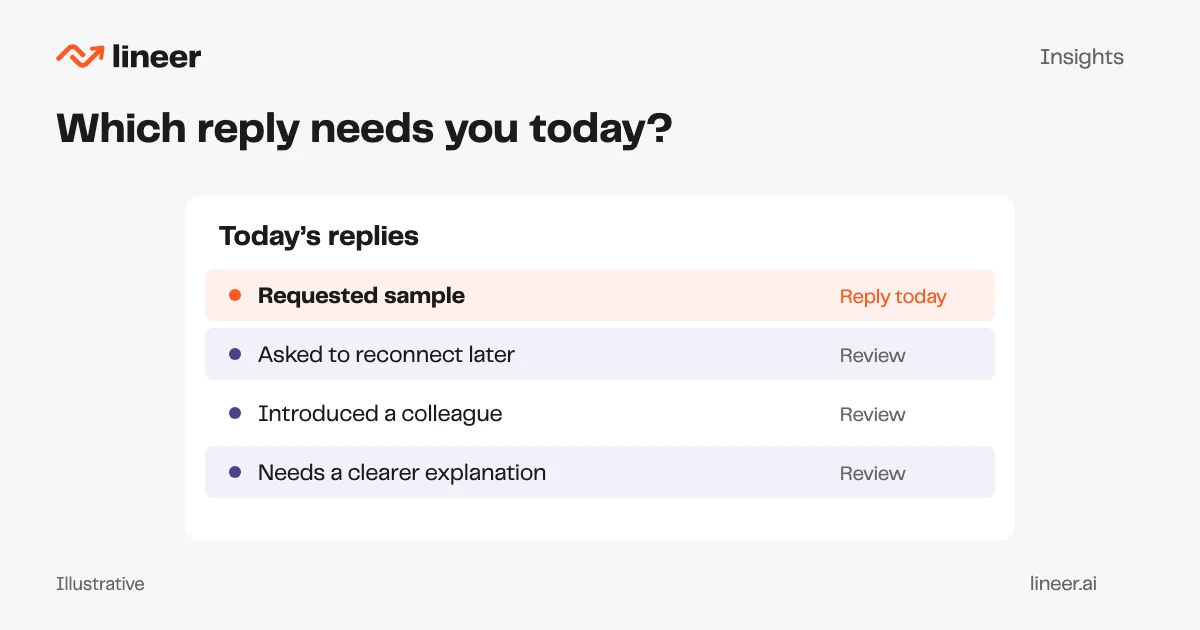
We recommend a human takes over as soon as a prospect responds, whether the response is positive, neutral or negative. AI can help prepare the outreach that starts the exchange. The person responsible for the relationship should decide how to answer and when to reconnect. Use the human handoff guide to establish ownership and check that automated cold follow-ups have stopped.
What the Lineer email review supports
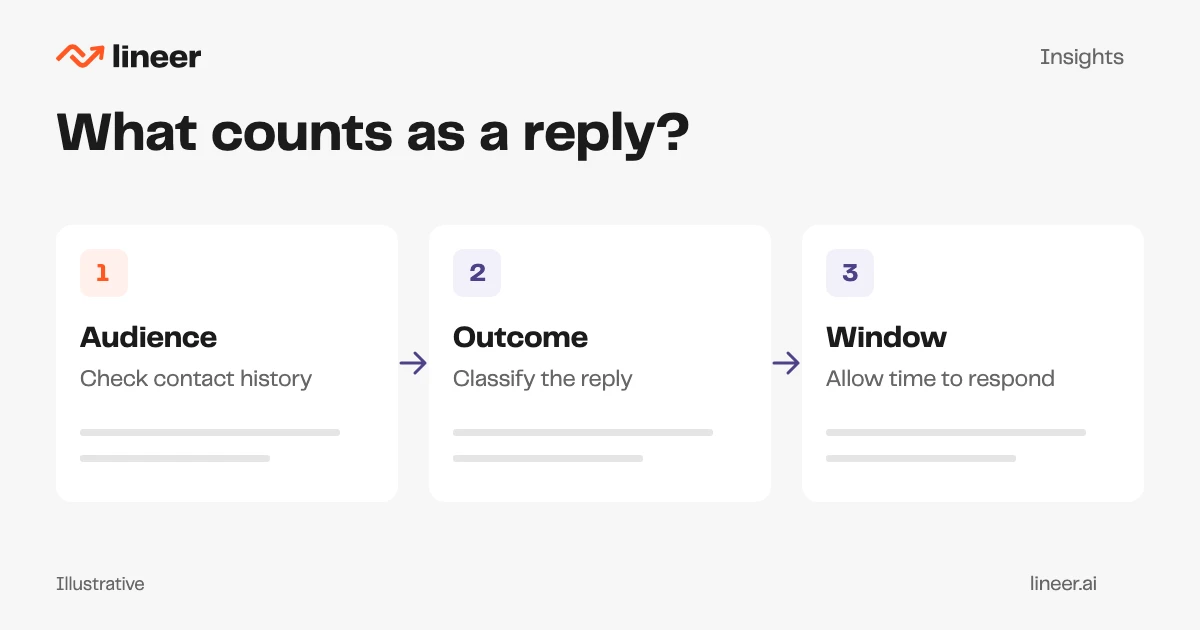
Information requests were a recurring next step in our pooled review of Lineer emails. Of 45 first replies reviewed, ten expressed interest in a next step. Seven of those ten requested information or materials, two proposed or agreed to a call, and one expressed interest with a referral. Three other replies asked for clarification of the offer. These findings support preparing to answer requests for information as part of your sales workflow.
The review started with 3,097 opening emails and examined replies received within 14 days, before a second recorded send. An opening email was the earliest retained send in its outreach record, and some recipients had prior contact. The counts describe what those recipients requested. They provide no measurement of which seller response produced a meeting or sale. The response process and examples above are editorial recommendations.